
“I’m Not Getting Enquiries From Therapy Directories” I see this come up constantly in counselling groups:
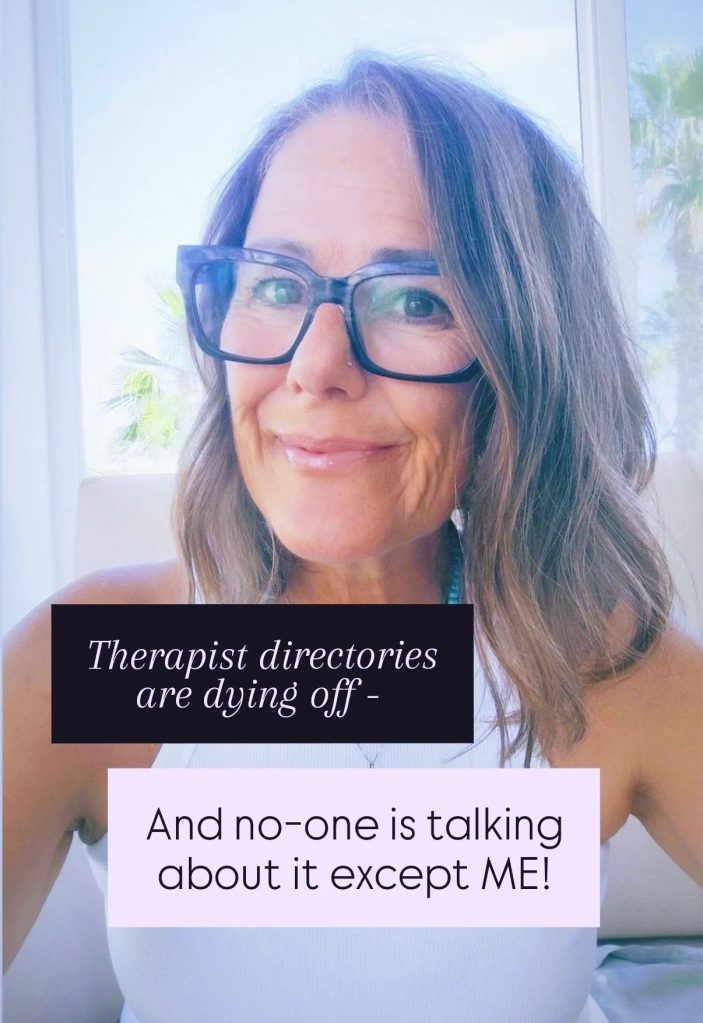
Every week in counselling groups, I see the same frustration:
“I’m listed on three directories and still not getting enquiries. What am I doing wrong?”
The truth? Probably nothing. You’re simply trying to market your private practice using strategies that no longer work. The landscape has shifted… and hardly anyone is talking about it except me.
The Quiet Decline of Therapy Directories
Ten years ago, directories were the go‑to. If you were listed on Counselling Directory or BACP, chances are you’d get a steady stream of enquiries without having to do much else. But in 2025, this just isn’t the reality anymore.
Why?
Because the way people search for therapists has fundamentally changed.
- AI is now driving recommendations. Increasingly, people aren’t scrolling through lists of profiles. They’re asking ChatGPT, Perplexity, or Google’s AI Overviews: “Who is the best therapist near me for anxiety?” or “Who can help with burnout and perfectionism?”
- Directories aren’t built for AI. Most are generic and have limited content fields – nothing that helps AI truly understand who you are, what makes you different, and why you’re the right person for a specific client’s needs.
- Clients want connection, not lists. Therapy is personal. A name and a qualification won’t cut it anymore. People want to feel like you understand them before they ever reach out.
SEO Has Changed – It’s About Connection, Not Keywords
Traditional SEO advice such as “cram your site with keywords like counsellor in Manchester” is outdated. A while this still needs to be done, this is only now a very small part of your SEO because Google and AI now prioritise helpful, human, in‑depth content over keyword stuffing.
That means your website needs to:
- Speak directly to your ideal client’s daily struggles and fears (psychographics, not just demographics)
- Show the small shifts and desires they’re longing for – and help them see themselves in your words
- Reflect your uniqueness as a therapist: your way of working, your approach, your lived and professional experience
- Be updated regularly with content that signals trustworthiness and authority
When my clients implement this, enquiries start coming from people who are already sold on working with them, because their content has built trust long before the first email is sent.
Instagram Is Now Indexed, And AI Is Watching
Most therapists don’t realise:
- Instagram posts are now indexed by Google.
- AI tools like Perplexity and ChatGPT scrape and recommend social content alongside websites.
This means your Instagram is no longer “just for social” , it’s part of your SEO footprint. If you’re invisible there, or if your posts are generic tips that could belong to any therapist, you’ll struggle to be surfaced in AI recommendations.
The therapists I mentor who embrace this are seeing huge results: they’re booked from people who’ve never liked a post but have been silently following for months – and who’ve found them through a mix of AI recommendations, search, and social.
Why This Isn’t Being Talked About (Except Here)
Most training therapists receive on marketing is years out of date. It still teaches:
- Stay anonymous and don’t show anything personal
- Rely on directories and maybe a basic website
- Use keywords like “anxiety therapist near me” and hope for the best
That advice was shaky five years ago, and now in 2025, it’s actively holding therapists back.
No one else in the therapy space is talking about AI indexing and this shift in client behaviour in depth, yet it’s already here….right now. If you don’t adapt, you’ll be left wondering why your phone never rings while others are quietly building waitlists.
Clients Want Fast, Personalised Answers, Not Pages of Search Results
Consumer psychology around finding goods and services has changed dramatically, and it’s still changing fast. People no longer have the patience to trawl through endless pages of therapists on a directory or sift through dozens of Google search results.
Increasingly, they want an immediate, personalised answer , so they’re going straight to AI platforms and asking, “Who’s the best therapist near me for burnout?” or “Who can help with anxiety after a breakup?”
The platforms then pull answers based on who they recognise as credible and relevant, and if your content isn’t humanising and doesn’t clearly signal that, you won’t even make it into the recommendation list.
What To Do Next
- Review your website: does it read like a list of services, or like a conversation with the person you most want to help?
- Start creating content (blogs, Instagram posts) that speaks to your ideal client’s inner world, not just their symptoms.
- Understand that visibility is part of your duty of care – if people can’t find you, they can’t get help.
My clients who’ve made these shifts have gone from months of silence to consistent enquiries – some closing their directories entirely because their websites and social content now do all the heavy lifting.
If you’re reading this and realising your directories and website might be stuck in 2015 marketing… you’re not alone. The good news is, this isn’t about scrapping everything – it’s about shifting how you show up so both humans and AI can actually find and trust you.
I teach therapists how to do exactly this in a way that feels ethical and natural – no gimmicks, no performative social media, just connecting content that works.
If you’re reading this and realising your directories and website might be stuck in 2015 marketing… you’re not alone. The good news is, this isn’t about scrapping everything – it’s about shifting how you show up so both humans and AI can actually find and trust you.
I teach therapists how to do exactly this in a way that feels ethical and natural – no gimmicks, no performative social media, just connecting content that works.
The future of finding a therapist is already here. Are you making yourself findable? If you don’t want to get left behind, my membership is reopening soon. It’s where I show therapists how to stand out in an AI‑driven world:
- Build trust that goes beyond “safe space” statements
- Understand and speak to your ideal clients on a psychographic level
- Show up confidently online without feeling salesy
- Create content that actually gets you found and chosen
Doors reopen on 1st September, and priority list places always go first. If you want the first access, limited to 25 newcomers, email me at info@melanielaysolutions.com or use the form below, and I’ll give you all the info!


 Mel Lay - Ethical Marketing for Counsellors and Therapists
Leave a comment